Research-Based Attention Training Games
Easy fun games to help kids train attention skills

What’s included in
$39/mo
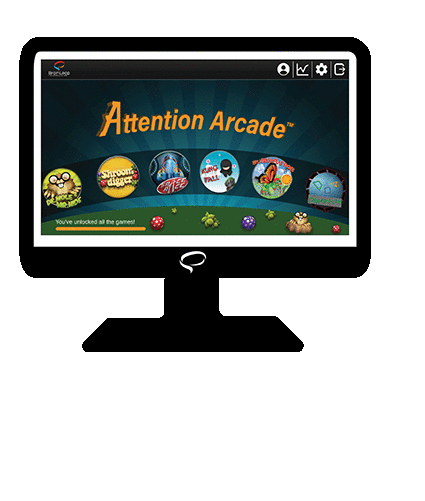
Get the BrainLeap™ Attention Arcade games and assessments ready to download and play.
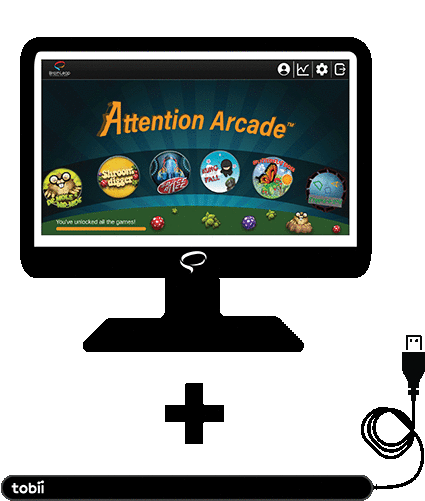
To play the games you need the eye tracker. You can purchase the eye tracker here:
$49/month
Get the Attention Arcade games ready to download and play and the Toobii Eye Tracker shipped to you.
The one-time $100 deposit is fully refundable when you return the eye tracker.

The goal of Dr. Mole & Mr. Hide is to hit bandit moles as they pop out of the ground and to avoid looking at the professor moles. As the game progresses, the moles appear more quickly and from more locations. Eventually they even parachute from the sky! The game trains the ability to quickly and accurately orient the player’s gaze and attention to a sudden event, and to monitor a wide range of view. As the game gets harder, inhibitory control is also developed as the player avoids looking at the professor moles.

In Shroomdigger, the player searches for spotted-top mushrooms in a mystical landscape. Focusing gaze on a “shroom” causes it to shrink until it disappears with a poof. Find all the shrooms before time runs out! The game trains attention by requiring steady fixation of gaze, visual search in a crowded field, and the ability to ignore moving distractions.

In Space Race, the player uses gaze to steer a ship through a cosmic race course, aiming for green gates, avoiding red gates, and collecting stars for bonus points. The game trains anticipatory focus by requiring the player to gaze ahead of the current ship position. Executive functions related to planning are trained by the need to quickly decide whether collecting a star will leave enough time to avoid a red gate that causes damage to the ship.
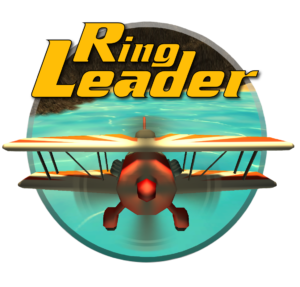
In Ring Leader, the player is a pilot-in-training and flying a plane through a canyon. The goal is to maneuver the plane through the rings while avoiding the birds. As the game progresses, the rings are closer together, demanding faster maneuvers between rings. The game trains the ability to orient attention quickly then hold a steady fixation of attention and gaze to get through the rings. Inhibitory control is also trained by not looking at the birds as they come closer to the plane.

In Kung Fall, the player trains a ninja for the Dojo’s Aerial Skills exam. Using gaze, the player guides the ninja to land and balance on a series of rock pillars while avoiding birds and ignoring falling cherry blossoms. The game trains planning, steady fixation of attention and gaze, and the ability to ignore moving distractions.

Butterfly Bob flies through a peaceful landscape, collecting nectar from flowers while avoiding menacing bugs and traps hiding in bushes. The player uses gaze to guide Bob vertically, flying higher or lower as needed. It trains anticipatory focus, planning, and prioritization.
In Trapped-a-Zoid, the player uses gaze to steer a spaceship to avoid colliding with neighboring ships. It trains inhibitory control of attention, requiring the player to suppress salient visual input while gazing into the empty space where the spaceship will be safe. Executive function is trained by engaging top-down strategy planning.
The assessment tasks are best used to measure a player’s improvement from one assessment to the next. They are not an accurate assessment of attention challenges on their own.
The Attention Arcade™ includes 5 assessments which each measure different aspects of attention. The purpose of the assessments is to show that skills users are developing in the games transfer to skills in the real world.
When the player looks at the collection device in the middle of the screen, a ghost appears peripherally in one of 16 locations. If the player looks to the ghost before the timer runs out, then the ghost is trapped and pulled into the center object. The assessment measures the timing and accuracy of the player’s ability to orient their attention to a peripheral stimulus.

Players must keep the campfire lit by staring at the fire. There are friendly forest animals in the area around the campfire as well as woodland noises that are all distractors. This assessment measures a player’s ability to ignore distractions and maintain focus.

In Tiger Trot, the player sees a tiger cub running along a jungle path and peripheral cues that indicate where upcoming obstacles are located. The player must maintain fixation on the tiger during the whole task. If the player deviates, an arrow appears to cue the player to look at the tiger and the tiger slows down. Tiger Trot provides a sensitive measure of covert orienting speed.
In Gone Fishing, the player fixates on the fisherman to fill the bob, then cues appear to the left or right. If the cue is a fish, then the player’s task is to look at the fish to catch it. If the cue is a turtle, then the player’s task is to look at the opposite side of the screen where a fish is hiding. This anti-saccade task measures the speed of reaction to the fish targets and inhibitory control in terms of the student’s ability to suppress a look at the turtle (a distractor). Because the game requires players to switch between pro-saccade and anti-saccade trials, we also believe that reaction time measures from this game can be a sensitive measure of task-switching ability.
In Gone Fishing, the player fixates on the fisherman to fill the bob, then cues appear to the left or right. If the cue is a fish, then the player’s task is to look at the fish to catch it. If the cue is a turtle, then the player’s task is to look at the opposite side of the screen where a fish is hiding. This anti-saccade task measures the speed of reaction to the fish targets and inhibitory control in terms of the student’s ability to suppress a look at the turtle (a distractor). Because the game requires players to switch between pro-saccade and anti-saccade trials, we also believe that reaction time measures from this game can be a sensitive measure of task-switching ability.
Get the games today!
$39/mo
Get the BrainLeap™ Attention Arcade games and assessments ready to download and play.
To play the games you need the eye tracker. You can purchase the eye tracker here:
$49/month
Get the Attention Arcade games ready to download and play and the Toobii Eye Tracker shipped to you.
The one-time $100 deposit is fully refundable when you return the eye tracker.

Just like with exercise, you have to train regularly to get results. We recommend training 5 days per week for 20-30 minutes per day. It is a good idea to pick a specific time of day or trigger (e.g. right after lunch) to train.
While it is important to train regularly, a student may find the games particularly challenging when starting out. It is OK to start with only 5-10 minutes per session and work up to 20-30 minutes. It is also fine to split training into two sessions for a total of 20-30 minutes.
Each game trains different aspects of attention. Even if a student has a favorite game, it is important that they also play the other games. Also, you will notice that only three games are unlocked initially. These are the easiest games and good for getting started. The other more challenging games are unlocked as a student logs enough time on the initial games.
Successful training will require few adaptations – at home and in the classroom. Since we are training attention, minimizing distraction for the player—especially early in training—is important. The games provide controlled distraction and increase the amount of distraction throughout game play.
The computer should be set on a stable surface. The eye tracker is sensitive, and an unstable table will create movement that could be mistaken for gaze shifts. Finally, glare from a window can make detection of gaze more difficult for the tracker. Be careful to position the computer and tracker in a setting with even lighting.